

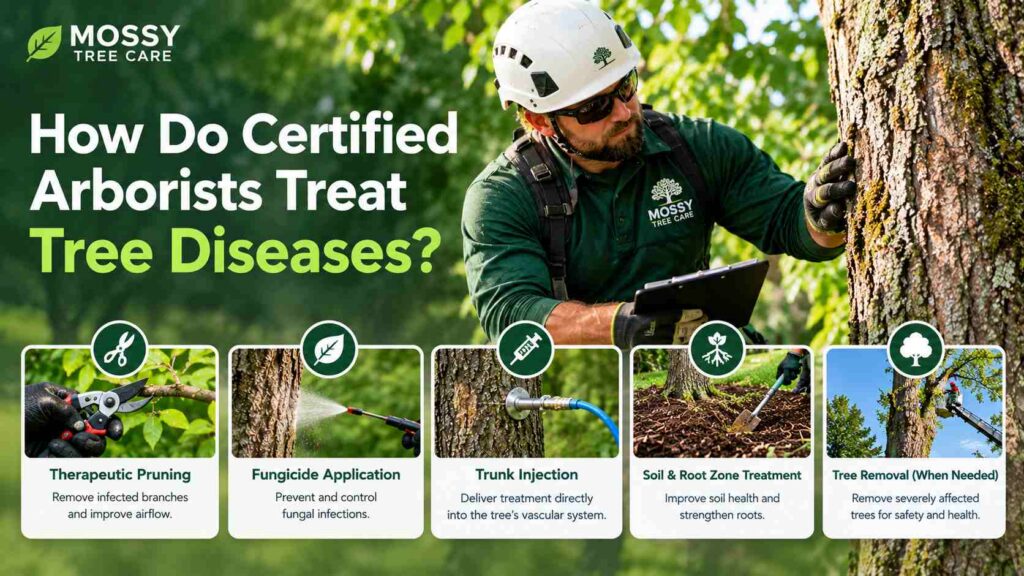
Certified arborists treat tree diseases through a process that starts with thorough diagnosis and moves into targeted treatment. That treatment might involve therapeutic pruning, fungicide application, trunk injection, soil correction, or in some cases, full removal. The right approach depends entirely on what the arborist finds during the initial assessment, because treating the wrong disease, or treating the right disease too late, can do more harm than leaving it alone.
Here in Portland, our wet winters and mild temperatures create conditions where fungal diseases thrive. Trees that look healthy all summer can show signs of decline by the following spring, and by that point, the infection has often been progressing underground or inside the vascular system for months. Professional diagnosis needs to happen before any treatment begins.
How a Certified Arborist Diagnoses Tree Disease
A proper diagnosis isn’t a quick glance at a few leaves. It starts with a full inspection of the tree from the root flare to the upper canopy, looking for patterns that point toward specific pathogens or environmental stressors.
Ground level comes first. The arborist checks the root flare for signs of decay, fungal fruiting bodies like Ganoderma or Armillaria mushrooms, and soil conditions that might be contributing to the problem. Compacted soil, poor drainage, and buried root flares are some of the most common issues we see in residential properties.
From there, the trunk gets a close look. Cankers, bark splitting, oozing sap, and discoloration all tell a story. Someone trained in tree pathology can often narrow down the cause based on the shape, color, and location of these symptoms alone.
Canopy inspection rounds out the picture. Leaf spotting patterns, premature needle drop, dieback on one side of the tree, wilting during cool weather when the tree shouldn’t be stressed. Put those symptoms together with what was found at the base and trunk, and the diagnosis starts to take shape.
When visual inspection isn’t enough, additional diagnostic tools come into play. Soil testing reveals pH imbalances, nutrient deficiencies, and the presence of soilborne pathogens like Phytophthora. Laboratory culturing and microscopic spore identification confirm fungal species when precision matters. Resistograph drilling or sonic tomography can measure internal wood decay without causing significant damage to the tree.
Common Tree Disease Treatments
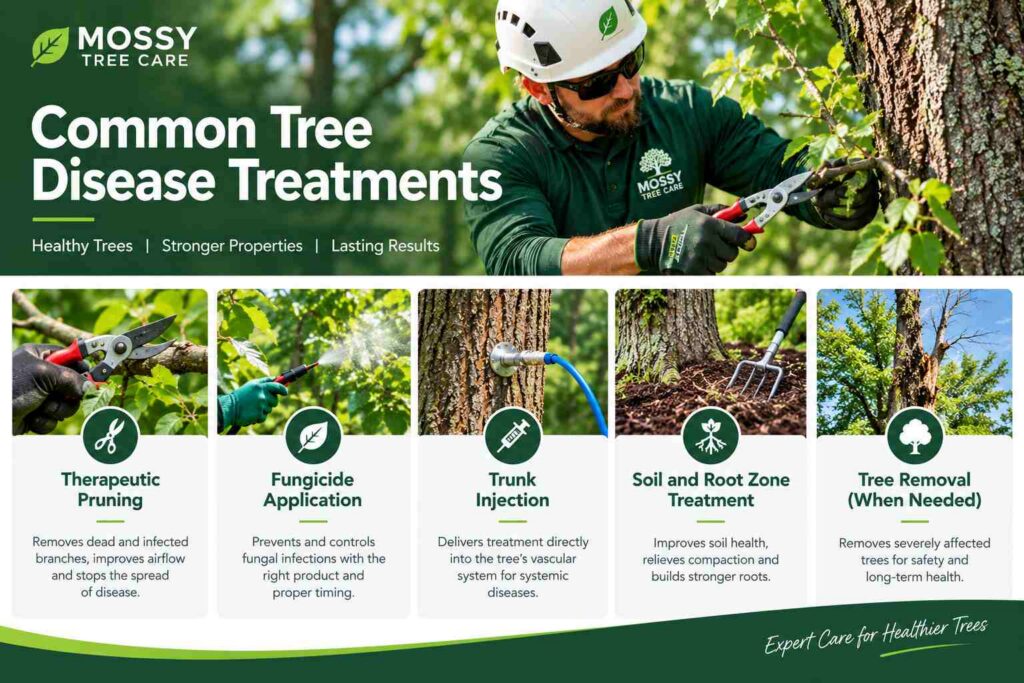
Once the diagnosis is clear, treatment follows one of several paths. Most tree diseases require a combination of approaches rather than a single fix.
Therapeutic Pruning
Pruning is often the first line of treatment. Removing dead and infected branches stops the disease from spreading further into healthy wood and improves airflow through the canopy, which reduces the moist conditions many fungi need to reproduce.
Proper technique matters here. Every cut should land 6 to 8 inches below the visible margin of the infection to make sure all affected tissue is removed. Tools get sanitized with 70% isopropyl alcohol between every cut, because pathogens like verticillium wilt and Dutch elm disease spread easily on contaminated equipment. Pruning during dormancy reduces stress on the tree and limits exposure to active insect vectors that carry certain diseases.
Fungicide Application
Fungicides work best as preventatives, not cures. Once a fungal infection has established itself deep inside the vascular tissue, topical sprays won’t reach it. Timing makes or breaks the entire application.
For anthracnose, which is extremely common on Portland maples, sycamores, and oaks, copper octanoate or chlorothalonil applied before bud break in spring can prevent new infection cycles. Propiconazole trunk injections are used for systemic vascular diseases like oak wilt. Phosphonate soil drenches help manage Phytophthora root rot in species susceptible to it, including dogwoods, cherries, and Port Orford cedars.
Choosing the right product for the specific pathogen matters more than most homeowners realize. Using the wrong fungicide wastes money and gives the disease more time to advance.
Trunk Injection
Trunk injection delivers treatment directly into the tree’s vascular system, bypassing the bark and reaching infected tissue that sprays cannot. This method works for systemic diseases where the pathogen has already entered the water-conducting vessels.
There is a catch, though. The tree needs enough healthy vascular tissue for the injected solution to move through. If the vascular system is too compromised, trunk injection won’t be effective, and other options become necessary.
Soil and Root Zone Treatment
Many tree diseases in Portland trace back to soil conditions. Our heavy clay soils compact easily, hold too much moisture in winter, and restrict root growth. Treatment options include vertical mulching, aeration, compost amendments, or mycorrhizal inoculation to rebuild the soil biology around a struggling tree.
Deep root fertilization addresses nutrient deficiencies that weaken the tree’s natural defenses. Correcting drainage issues around the root zone is especially important for preventing Phytophthora and Armillaria, both of which thrive in waterlogged soils.
Tree Diseases Common in Portland
Portland’s climate creates a specific disease profile that differs from what you will find in other parts of the country.
Swiss Needle Cast affects Douglas fir, which is the most common tree species in Oregon. The fungus causes older needles to yellow and drop, leaving only the newest growth at branch tips. Over several years, the canopy thins out significantly. This disease has become increasingly prevalent across the Pacific Northwest.
Phytophthora Root Rot is one of the most destructive diseases in our region. It attacks the root systems of cherry, dogwood, holly, madrone, oak, and several conifer species. Symptoms include pale foliage, poor growth, wilting, and black, foul-smelling root tissue below the soil line. Portland’s wet soil and heavy rainfall create ideal conditions for this water mold. Improving drainage and avoiding overwatering are essential parts of management.
Anthracnose thrives in Portland’s pattern of mild winters followed by cool, wet springs. It causes brown irregular spots on leaves, curling and distortion, and early leaf drop on maples, oaks, sycamores, and dogwoods. While rarely fatal on its own, repeated yearly infections weaken the tree and make it vulnerable to secondary problems.
Verticillium Wilt is a soil-dwelling fungus that enters through the roots and blocks the tree’s water transport system. Maples, ashes, and oaks are particularly susceptible. There’s no cure for verticillium wilt. Professional care focuses on keeping the tree as healthy as possible to slow the progression, but eventual removal and replacement with a resistant species is often the long term outcome.
Armillaria Root Rot is widespread throughout the Pacific Northwest. It decays root systems and can cause structural failure. Honey-colored mushroom clusters at the base of the tree are a telltale sign. Management involves improving drainage, avoiding root zone injury, and regular arborist inspections to monitor structural integrity.
When a Diseased Tree Can Be Saved vs. When It Needs Removal
Not every diseased tree needs to come down, and not every diseased tree can be saved. Several factors go into that call.
Treatment is usually viable when less than 50% of the canopy shows dieback and healthy vascular tissue is still present. The root system also needs to be structurally intact, with no significant trunk decay compromising stability.
Removal becomes the right call when more than half the canopy is dead, Ganoderma conks or other decay fungi appear on the trunk, trunk wounds exceed 50% of the diameter, or the root system has decayed to the point where the tree could fail in a storm. In those situations, keeping the tree standing is a safety risk, and emergency response may eventually be needed if failure occurs during high winds or heavy rain.
What to Expect During a Tree Health Assessment
If you have never called an arborist for a sick tree, here is what the process typically looks like.
Expect a walkthrough of your property where the arborist examines the affected tree from all angles. They will ask when you first noticed the symptoms, whether anything changed recently in the tree’s environment (construction, new irrigation, grade changes), and what the tree looked like in previous seasons.
Most inspections take 30 to 60 minutes depending on the number of trees involved. Soil samples or leaf and bark specimens may be collected for lab analysis. You should receive a written diagnosis and treatment plan that explains what was found, what the recommended treatment involves, the expected timeline for results, and what the realistic outcome is.
A good arborist will be honest about limitations. Some diseases can’t be cured, only managed. And some trees are too far gone for treatment to be worth the investment. With over 20 years in tree care across the Portland metro area, the team at Mossy Tree Care has seen every stage of every common disease in this region, and we will tell you straight what your tree needs.
How to Prevent Tree Disease Before It Starts
Prevention is always less expensive than treatment. A few practices go a long way toward keeping your trees healthy.
Water at the drip line, not at the trunk. One inch per week during dry periods is a good baseline for most established trees. Proper pruning on a regular schedule keeps canopy airflow high and removes dead wood where fungi take hold. Mulch 2 to 3 inches deep around the base of the tree, but keep it at least 6 inches away from the trunk to prevent moisture buildup against the bark.
Rake and remove fallen leaves in autumn, especially under trees that showed signs of fungal infection during the growing season. Overwintering spores on fallen debris are the primary source of reinfection the following spring.
If you prune your own trees between professional visits, sanitize your tools with rubbing alcohol before and after each tree. Spreading disease between trees on dirty pruning shears is one of the most common ways homeowners unknowingly make things worse.
Frequently Asked Questions
Can a diseased tree make other trees on my property sick?
Yes. Many tree diseases spread through root grafts between neighboring trees, windborne spores, contaminated soil, and insect vectors. Anthracnose spores travel on wind and rain. Verticillium wilt persists in the soil and can infect new plantings in the same spot. Prompt treatment of one tree protects the rest of your landscape.
How much does it cost to treat a diseased tree?
Treatment costs vary widely depending on the disease, the size of the tree, and the methods required. A fungicide application might run a few hundred dollars, while a multi season treatment plan with trunk injections and soil correction will cost more. Contact Mossy Tree Care for a free estimate based on your specific situation.
How long does it take for a treated tree to recover?
Foliar diseases like anthracnose often show improvement within one growing season if treatment is timed correctly. Root and soilborne diseases take longer, typically one to three years of consistent management before the tree stabilizes. Vascular diseases like verticillium wilt are managed rather than cured, so the timeline is ongoing.
Should I fertilize a sick tree?
Not without a diagnosis first. Fertilizing a tree with root rot can actually accelerate the problem by pushing top growth the damaged roots cannot support. An arborist determines whether fertilization is appropriate based on the specific disease and the tree’s overall condition.
How do I find a certified arborist near me?
Look for an ISA (International Society of Arboriculture) certified arborist. You can verify credentials through the ISA’s online directory at treesaregood.org. A legitimate arborist will carry liability insurance and workers’ compensation, provide written estimates, and never recommend topping a tree.
What is the difference between a tree disease and pest damage?
Diseases are caused by fungi, bacteria, or viruses. Pest damage comes from insects like bark beetles, borers, or aphids. The symptoms can look similar. Leaf discoloration, dieback, and wilting occur with both. An arborist can distinguish between the two based on the pattern of damage, the presence of insect activity (bore holes, frass, larvae), and laboratory testing when needed.