Trimmed carefully, pine trees will almost always survive and even benefit. Improper trimming, however, can indeed injure or kill a pine. Pines grow very differently from broadleaf trees: they put new buds only at branch tips and can’t regrow old wood. Cutting back too far (or hacking off the top) can starve or infect the tree. In short, trimming a pine tree will not automatically kill it, but wrong pruning techniques can cause serious stress or death. The good news is that with the right approach – gentle cuts at the right spots and times – your pine can stay healthy and even become stronger.
Pine trees grow from their tips and lack dormant buds on older wood, so big cuts are permanent. This means heavy pruning is risky. Pines also seal wounds slowly with resin, so large cuts leave the trunk exposed to rot and pests for years. For example, cutting flush against the trunk removes the protective bark layer, and a giant stub (like the one shown) can become a gateway for decay. In practice, only remove broken, diseased, or unsafe branches, and never chop more than about 20–25% of the tree’s foliage in one go.
Why Pine Trees Are Sensitive to Pruning
Pine trees have unique growth habits that make improper cuts especially dangerous. Unlike flowering trees that can sprout new branches from old wood, pines won’t regrow anything from a cut that’s older than about 2–3 years. In other words, if you cut a big branch back to bare wood, that part of the tree is gone forever. Also, pines rely on one main leader (the vertical top stem) to stay healthy. Cutting off or topping the leader destroys the tree’s structure.
Bad pruning can also upset the tree’s balance and defenses. Removing too many needles at once starves the pine of energy. Cutting into the branch collar (the swollen base where branch meets trunk) removes the tree’s natural seal. Large wounds or flush cuts give fungi and insects a chance to invade. Finally, pruning during drought, extreme heat or late fall can leave the tree with too much sap loss or winter damage. These factors together mean that pine trees need very careful pruning: if you go too far with the saw, the pine may never recover.
Common Pruning Mistakes to Avoid

To keep your pine alive and strong, steer clear of these common errors:
- Topping the tree: Cutting off the top leader or main branches to shorten the pine is extremely harmful. This practice wrecks the tree’s natural form, causes weak new shoots, and often leads to rot or death.
- Over-pruning: Removing more than ~20–25% of the pine’s needles or branches in one session can starve the tree. Pines have fewer leaves than hardwood trees, so every needle counts for food. Taking off too much at once stresses the pine severely.
- Lion-tailing: Stripping out all inner branches and leaving foliage only at the tips (like a “lion’s tail” of needles) is a bad idea. This makes the pine top-heavy and weak. Branches that lose their inner limbs develop no taper and are much more prone to breaking and sunburn.
- Flush cuts: Always cut just outside the branch collar (the swollen ring where the branch meets the trunk). Never cut flush to the trunk or remove the collar. The collar contains special cells that help seal the wound. A flush cut prevents proper healing and invites disease.
- Wrong timing or tools: Pruning at the wrong season or with dirty, dull tools can hurt the pine. Avoid heavy cuts in midsummer or late fall; late winter/early spring is best. Using sharp, clean blades is also crucial to make smooth cuts that heal quickly.
By avoiding these mistakes, you minimize stress on the pine. Remember, every cut changes the tree’s growth, so only prune with a clear goal of removing dead or problematic wood.
How to Trim Pine Trees Safely
For safe pine pruning, follow gentle, gradual methods:
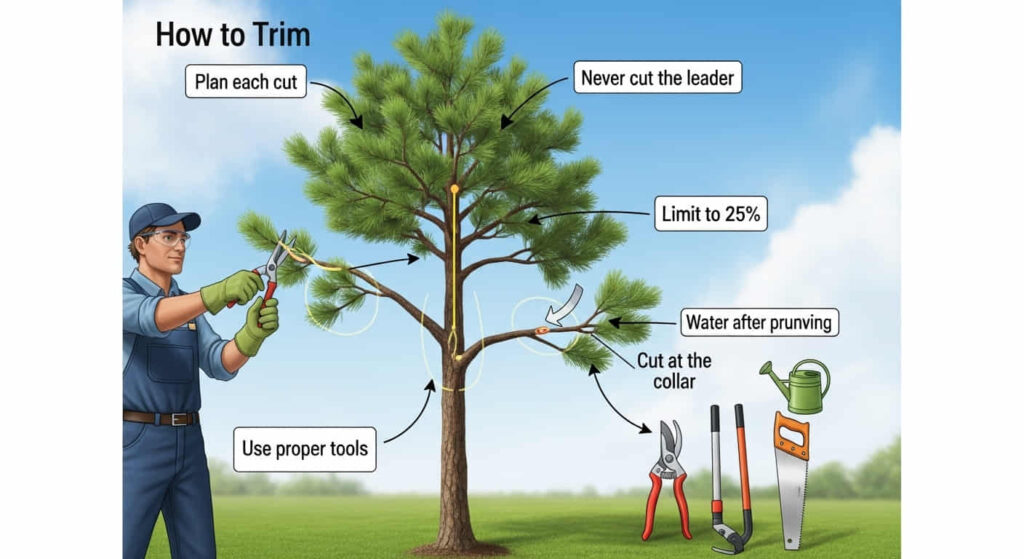
- Plan each cut: Identify dead, diseased, or crowded branches first. Start by removing those problem limbs only.
- Cut at the collar: Make clean cuts just outside the branch collar (the raised area at the branch base). This leaves the natural barrier intact so the tree can seal the wound. Avoid leaving any stub sticking out.
- Never cut the leader: Keep the central leader (topmost stem) intact. This single leader gives the pine its shape and vigor. Removing it will ruin the tree’s form and health.
- Limit the volume: In one year, trim no more than about one-quarter of the tree’s crown. A good rule is roughly 10–25% maximum. If you have a lot to do, spread it over several years so the pine has time to recover.
- Remove whole branches when needed: Instead of shortening a branch halfway, it’s safer to remove the branch entirely (at its collar). Pines can’t resprout from partial cuts the way deciduous trees can, so trimming back a branch spuriously only weakens it. When reducing height, cut a top branch back to a lateral branch, not the trunk.
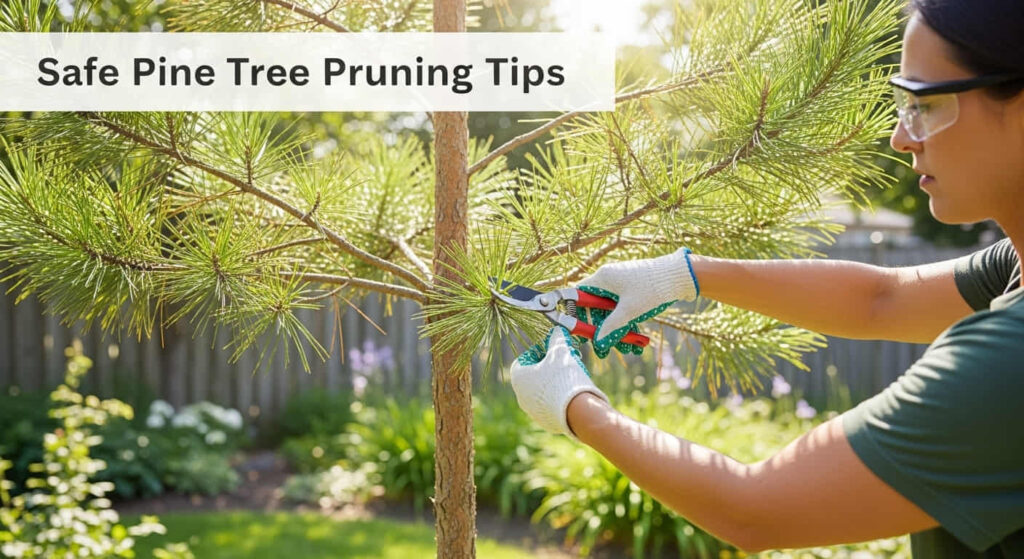
- Use proper tools: Use sharp pruning shears for small twigs, loppers for medium branches, and a pruning saw for thicker limbs. Wear gloves and eye protection. Disinfect tools between cuts if you cut diseased wood.
- Water and monitor: After pruning, give the pine a deep drink and watch it for signs of stress (brown needles or new pest holes). Proper watering and maybe light fertilization will help it recover.
Even the best pruning leaves a wound to heal. The image shows a freshly cut stump: note how large wounds expose the tree’s inner wood for a long time. That’s why we emphasize small, calculated cuts. A big flush cut like this (left behind) can take years to seal. By cutting at the collar and keeping cuts clean and limited, you help the pine seal itself quickly and avoid decay.
When Should You Trim Your Pine Tree?
Timing matters almost as much as technique. Late winter to early spring (just before new needles emerge) is generally the safest window. At this time the pine is still dormant, sap flow is minimal, and there’s several months of growing season ahead to heal wounds. Engram Tree Service notes that pruning too late in summer or into autumn doesn’t leave enough time for cuts to heal before winter.
If a branch is broken, diseased, or an immediate hazard, go ahead and remove it right away (no need to wait). But avoid doing a major pruning job during drought or heat waves, since the tree can’t cope with the extra stress. After trimming, give the pine some water and mulch around the base (keeping mulch a few inches from the trunk) to help recovery. Healthy pines that are cut carefully will usually resume growth with little trouble.
In summary, trimming a pine tree won’t kill it if you do it right. Focus on removing only dead or problematic branches, make proper collar cuts, and never cut off the central leader. Take it slow—keep each pruning session light—and schedule the work in late winter or early spring. By following these expert tips and avoiding common pruning mistakes, you’ll keep your pine strong and beautiful for years to come. When in doubt (especially for large or high pines), consider consulting a professional arborist to make sure the job is done safely.
FAQs
How much of my pine tree can I trim at once?
Experts recommend never removing more than about 20–25% of the live foliage in a year. Trimming up to about one-third of the crown is usually safe; more than that will severely stress the pine. If your tree needs a big reduction, do it over several seasons.
Should I prune my pine tree every year?
No. Pines need very little pruning if they’re healthy. Only trim when there are dead, diseased, or interfering branches. The idea that “you must trim pines yearly” is actually a myth. Unnecessary frequent pruning can do more harm than good by repeatedly shocking the tree.
What if my pine was topped or badly cut – can it recover?
Unfortunately, topping a pine is very risky. Removing the top leader or a large limb usually causes permanent damage. Pines can’t regrow a new top once it’s cut off, and any sprouts will be weak. If a pine has been topped, it may never regain its original shape, and its health could decline. It’s best to consult an arborist if a major topping cut has been made, as the tree may need extra care or even removal of weakened limbs.
Can I prune my pine tree myself, or should I hire a professional?
Homeowners can handle small pruning tasks (like removing a few low dead branches), but large jobs or high branches are better left to pros. An arborist knows the right pruning methods for pine physiology. In fact, tree-care experts advise that hiring a professional “takes the guesswork out” and ensures the cuts are done correctly. If the pine is tall or you’re unsure about what to cut, getting expert help is the safest choice.