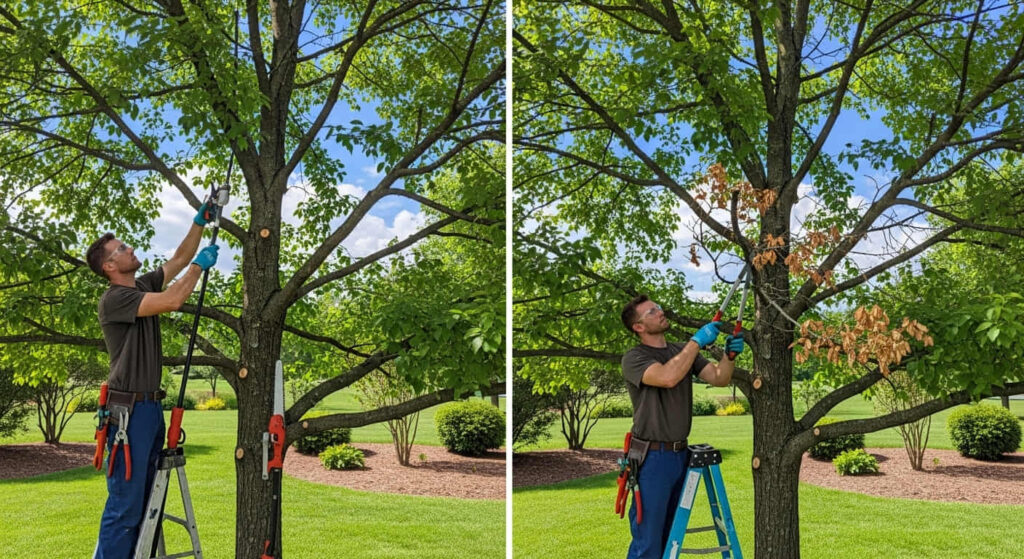
When we talk about taking care of trees, trimming and pruning often get mixed up, but they’re not the same. Trimming is like giving a tree a haircut – it’s all about shaping the tree, keeping it neat, and controlling its size. Pruning, on the other hand, is like giving the tree a health check-up – it involves cutting away dead, diseased, or crowded branches to keep the tree healthy and strong. In short, trimming focuses on appearance and form, while pruning focuses on health and structure. Read on to see when and why you’d do each, with simple tips to help you keep your trees both beautiful and robust.
What Is Tree Trimming?
Tree trimming is mostly about looks and size control. It involves making light, cosmetic cuts so the tree or shrub maintains a neat shape. According to tree care experts, “the process of tree trimming is focused primarily on aesthetics” – we trim trees to keep a desired shape and appearance. Think of it as tidying up: removing small overgrown branches or cutting back tips so the tree looks balanced and pleasing.
Common reasons to trim a tree include improving its shape and symmetry, letting more sunlight reach other plants, and preventing branches from hitting buildings or power lines. For example, if a branch starts scraping your roof or crowding a pathway, you’d trim it back. Trimming also reduces hazards: weak or drooping branches can be snipped off so they won’t fall unexpectedly. Typically, home gardeners or landscapers trim trees once or twice a year (often in spring or summer) to keep them from getting too unruly.
Trimmed trees might use smaller tools like hand pruners, hedge trimmers, or electric shears, because the branches cut during trimming are usually not very thick. In practice, trimming is something many homeowners do themselves for hedges and ornamentals. It’s like clipping your shrubs into a nice shape, rather than heavy-duty cutting. By keeping up with trimming, your yard stays tidy, and trees don’t grow into places where they shouldn’t.
What Is Tree Pruning?
Tree pruning is about tree health and safety. Instead of shaping, pruning means removing parts of the tree that are sick, damaged, or redundant. As one guide explains, pruning is primarily focused on a tree’s future health: it involves “removing dead, diseased and loose branches that prevent the trees from flourishing”. In other words, when you prune, you cut away branches that could harm the tree’s health or safety.
Key goals of pruning include preventing disease, improving structure, and encouraging strong growth. For example, pruning removes limbs infected by fungus or insects to stop the problem from spreading. It also thins out a crowded canopy, which lets air and sunlight reach deeper into the tree and reduces the chance of mold or rot. Proper pruning can even make a tree more productive: many fruit trees yield more and larger fruit after being pruned correctly.
Pruning often uses stronger tools like loppers, hand saws or pole saws to handle thicker branches (especially when removing big limbs). Unlike routine trimming, pruning is done less frequently – often annually or as needed – and usually at special times. For most trees, experts recommend pruning during the dormant season (late winter or early spring) when the tree is asleep and less likely to stress. That said, any dangerously dead or broken branch should be pruned out immediately, regardless of the season.
In summary, think of pruning as targeted care: if a branch is dead, diseased, crossing over another, or posing a hazard, it gets pruned away. This keeps the tree healthy over the long run, rather than just keeping it looking neat.
Key Differences in Purpose, Timing, and Tools
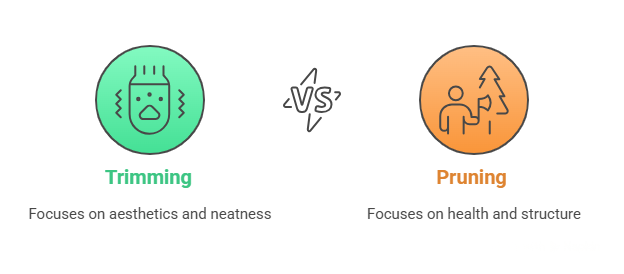
Here’s a quick comparison to keep the differences clear:
- Purpose: Trimming is mainly for shape and appearance; pruning is for health, safety, and structure.
- Frequency: Trimming is done regularly for neatness (often 1–2 times per year). Pruning is done less often, usually once a year or when specific issues arise.
- Timing: Trimming is typically done during the growing season (spring/summer), when the tree is actively growing. Pruning is best done in the dormant season (late winter/early spring) for most trees, so new growth isn’t shocked.
- Tools: Trimming uses lighter tools like hand shears, hedge trimmers, or small pruners. Pruning uses sturdier tools like lopping shears, pruning saws, and pole pruners for thicker branches.
- Typical targets: Trimming is common on shrubs, hedges and ornamental trees to keep them tidy. Pruning targets mature trees, fruit trees, and any tree parts that are dead, diseased, or structurally unsound.
Use this guide to decide: if you’re removing branches just to shape the tree or thin the canopy, you’re trimming. If you’re cutting to remove problem branches (like disease or crossing limbs), you’re pruning.
Why Trimming and Pruning Matter
Both trimming and pruning help keep trees strong and beautiful, but in different ways. Trimming prevents overgrowth that could block sunlight or damage property, while pruning prevents disease and promotes healthy growth. For example, removing a dead limb through pruning can stop decay from spreading into the trunk. Similarly, trimming away excess foliage allows more light to reach lower branches and nearby plants.
Did you know? Research and expert advice show that correct pruning not only keeps a tree safe but can boost its blooms or fruit yield. In Oregon’s rainy climate, good pruning also improves air flow through the canopy, which helps prevent mold and mildew growth. On the other hand, well-timed trimming can make your yard look its best – clipped hedges and neatly-shaped trees add curb appeal and let you get the full benefit of your green space.
In short, regular trimming and pruning together ensure that trees grow healthy and don’t become hazards. They may sound similar, but they each play a unique role in tree care.
When to Do Each: Practical Tips
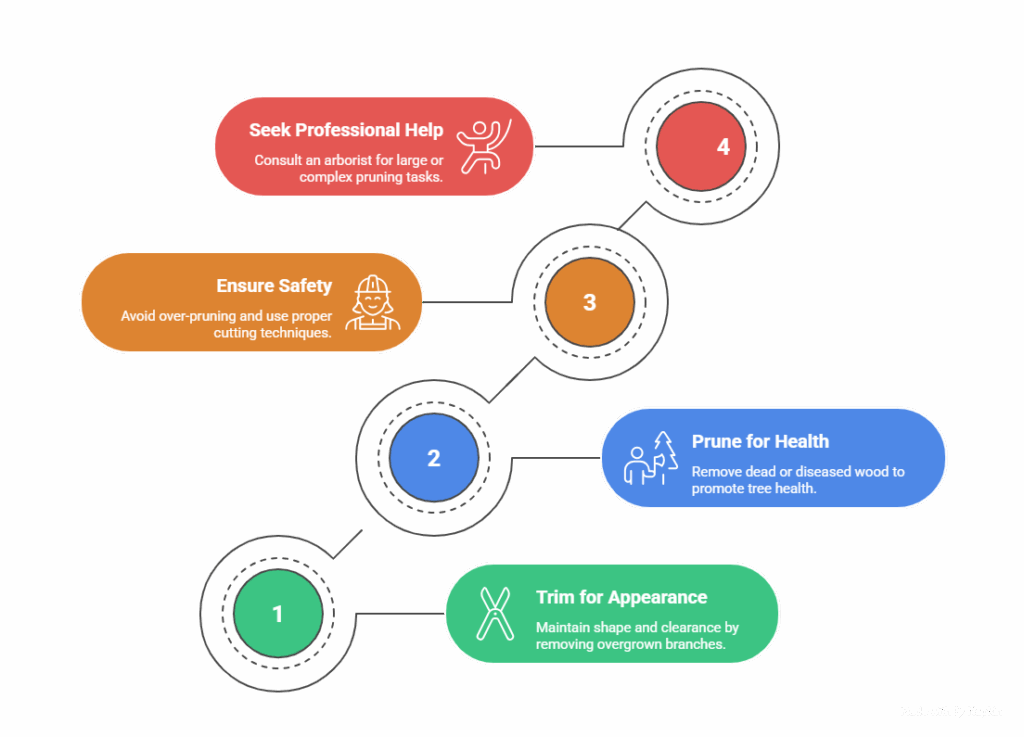
- Trim for Appearance or Clearance: If branches are simply overgrown, shading out other plants, or brushing on structures (houses, fences, sidewalks), that’s a job for trimming. For instance, you might trim a flowering shrub after it blooms to keep its shape, or trim the lower limbs of a tree to clear a path. In Oregon, many gardeners trim hedges and ornamental plants in spring or summer to encourage fresh, full growth.
- Prune for Health: If you spot dead, broken, or diseased wood on a tree, prune it away. Also prune branches that cross or rub each other, which can wound the bark over time. Pruning is often done on fruit trees (like apples or cherries) in winter to encourage strong branches and big harvests. Remember, it’s better to prune a bad branch out early than let it spread decay.
- Safety First: Never trim or prune more than about one-third of a tree’s canopy at once; taking off too much leaf area can stress the tree. And when cutting, always make clean cuts just outside the branch collar (the swollen area at the branch base) so the tree can heal properly. For very large branches, use a three-cut method (starting with an undershoot) as OSU Extension advises.
- Get Professional Help: Large trees or branches overhead can be dangerous. If you need to remove big limbs or if you’re not confident, it’s wise to call a certified arborist. They have training to prune safely and know local tree species. In contrast, small-scale trimming of shrubs or small trees is often doable with hand tools by a homeowner.
By following these tips and understanding the difference between trimming and pruning, you can give your trees the right care at the right time.
Conclusion
In summary, tree trimming and tree pruning both involve cutting branches, but for different reasons. Trimming is like grooming – it keeps trees and shrubs looking neat and controlled. Pruning is like medical care – it removes unhealthy parts so the tree stays vigorous and safe. Both practices are important. When done properly (especially by professionals for big trees), they help your landscape look great and your trees live longer. Whether you’re in Oregon or anywhere else, understanding these tasks will help you keep your yard beautiful and your trees in top shape.