

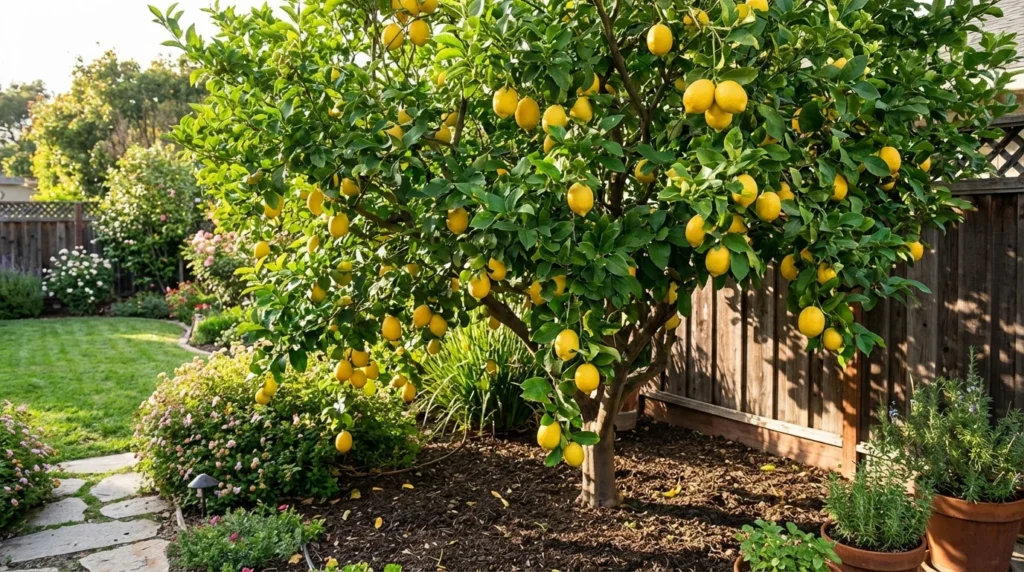
Lemon trees thrive on bright sun, regular water, and good feeding. In practice, that means planting your lemon in a spot that gets at least 6–8 hours of direct sunlight each day, watering it deeply but letting the top few inches of soil dry out between waterings, and feeding it with a high-nitrogen citrus fertilizer during the spring and summer. In short: give your lemon tree light, warmth, water, and food, and it will reward you with fragrant blossoms and juicy fruit.
Sunlight and Location
Lemon trees need lots of sun. Aim for 6–8 hours of direct sunlight per day. A sunny, sheltered spot (for example a south-facing wall or open garden) is ideal. These trees love warm weather – they do best between about 70–90°F – and are cold-sensitive. Even a brief freeze can harm a lemon tree (Meyer lemons suffer damage below about 22°F). In colder climates, it’s safest to grow lemons in pots that can be moved under cover in winter or to plant them where frost is least likely (for example on the warm side of a building).
Watering
- Deep, infrequent watering: Water your lemon tree thoroughly so the moisture reaches all roots. Then let the top 2–3 inches of soil dry out before watering again. For many outdoor trees, this means about once a week, and more often during hot, dry spells.
- Good drainage: Always plant in well-draining soil. Avoid clay pits or spots where water pools. Lemon trees hate “wet feet” – constantly soggy soil leads to root rot. Use a pot or garden soil mix with good drainage (add sand or perlite if needed) and ensure excess water can run off. In very hot weather, check the soil more often; young trees especially may need extra watering as their roots develop.
Soil and Feeding
- Soil: Lemon trees prefer a slightly acidic, rich soil (pH around 6–7) that drains well. You can mix in compost or aged manure to improve fertility and drainage. Apply a layer of mulch (wood chips or straw) around the base (keeping it a few inches from the trunk) to help retain moisture and keep weeds down.
- Fertilizer: Feed your lemon tree regularly during the growing season. Use a fertilizer formulated for citrus or a balanced high-nitrogen formula (for example N–P–K ratio of about 2-1-1). A simple schedule is to fertilize once a month in spring and summer. This ensures the tree has plenty of nitrogen (for leafy growth) as well as phosphorous and potassium for fruit. Fertilizing in early spring (when new growth starts) and again in mid-summer typically works well. Tip: Do not fertilize in winter; give the tree a rest when growth slows.
Pruning
Prune your lemon tree sparingly to keep it healthy and productive. Each spring (after any threat of frost), remove dead, damaged or crossing branches to open up the canopy. This improves air circulation and sunlight penetration. Also pinch out any suckers (vigorous shoots at the base or roots) so the tree focuses energy on the main limbs. Avoid heavy pruning, as excessive cutting can reduce that year’s fruit harvest. Use clean, sharp pruners and make cuts at branch collars; a little pruning each year (rather than drastic cuts) keeps the tree shapely and healthy.
Pests and Common Issues
- Pests: Watch for aphids, scales, mealybugs, and citrus leaf miners – they are common on lemons. Inspect new growth and the undersides of leaves regularly. If you spot pests (sticky residue, curled leaves, or visible bugs), spray the foliage with insecticidal soap or horticultural oil in the early evening. Evening spraying gives treatment time to dry so the sun won’t burn the leaves. You can also attract beneficial insects like ladybugs to help keep pest numbers down.
- Leaf problems: Yellowing leaves often signal a care issue. Overwatering or poor drainage can cause root stress and yellow leaves. Conversely, underwatered lemon trees also yellow and drop leaves. The key is a consistent watering routine – don’t let the soil stay soaked. Nutrient deficiencies (especially nitrogen or iron) also turn leaves yellow. If leaves stay pale, check your fertilizer schedule or try a foliar spray of iron. In most cases, correcting the watering and feeding will restore green foliage.
Harvesting Lemons
Once your tree is well cared-for, it should produce fruit. Lemons typically start out green and slowly turn a rich yellow as they ripen (often over 6–9 months). Pick them when they are fully yellow and slightly soft to the touch. To harvest, snip or gently twist the fruit off with pruners or scissors – pulling by hand can damage the branch. Tip: Regular harvesting is good for the tree, as it encourages more blooms instead of letting all energy go to old fruit.
With these basics – plenty of sun, the right water and soil, regular feeding, and a bit of maintenance, your outdoor lemon tree will grow vigorously. You’ll enjoy fragrant spring blossoms and, before long, a bountiful crop of zesty lemons for your kitchen.