

Yes – you can kill a tree’s stump (and prevent it from re-sprouting) with the right methods. The most effective approach is the cut‑stump herbicide method: cut the tree close to the ground and immediately treat the exposed wood with a systemic herbicide. Applied promptly, this will kill the stump and roots, preventing new shoots. Other options – like drilling the stump and filling it with salts, starving it by covering, or burning – can work too, but they are slower or require more caution. Below we explain each method in simple steps, with tips and warnings so you can choose the safest solution for your yard.
Cut‑Stump Herbicide Method (Fast & Reliable)
If you want a quick, sure kill, use herbicide right after cutting the tree. First, fell the tree and cut the stump as low as possible. Then apply a systemic herbicide (like glyphosate or triclopyr) to the freshly cut wood, focusing on the ring of sapwood under the bark (the cambium layer). This chemical is absorbed into the roots and prevents the stump from sprouting again.
- Choose a no-soil-activity herbicide: Extension experts recommend glyphosate or triclopyr amine products (they won’t leach into surrounding soil).
- Paint or spray it on the stump’s top and 2–3 inches down the side. Cover the entire cut surface, especially just inside the bark.
- Use it immediately after cutting (within minutes) for best results. Delaying can let the tree seal over, reducing effectiveness.
- Wear gloves and eye protection, and always follow the label instructions on the herbicide for safety.
This “cut‑and‑paint” technique is widely used by arborists and extension services. As Alabama Cooperative Extension notes, an herbicide on the stump top “kills the stump and prevents new growth”. A herbicide like glyphosate or triclopyr will travel through the roots and starve them, so the entire root system dies. (If you cut sprouts that appear later, treat their cut surfaces similarly to exhaust any remaining root energy.)
Salt and Chemical Stump Killers (DIY Options)
Several DIY guides suggest using salts to kill stumps. Two common tricks are drilling the stump and filling it with Epsom salt or rock salt, or using commercial stump remover crystals (potassium nitrate). The idea is that high salt concentrations draw moisture out of the wood, accelerating rot. Here’s how it works in steps:
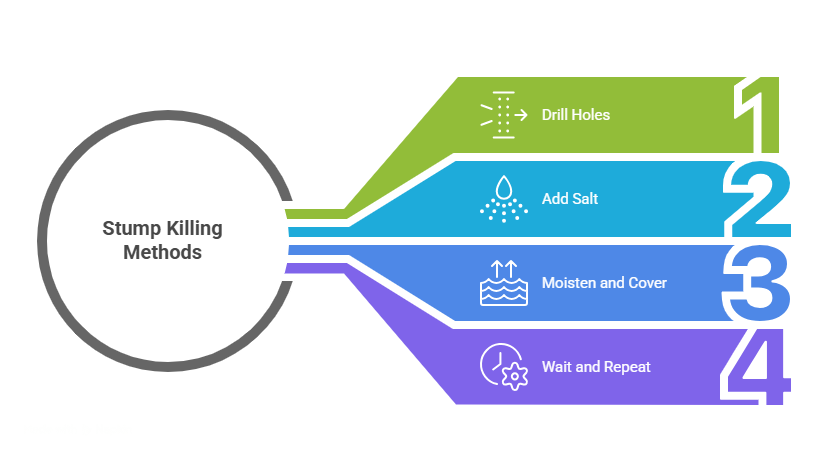
- Drill Holes: Use a large drill bit (1″ or bigger) to bore holes 8–12 inches deep into the stump, spaced a few inches apart.
- Add Salt: Fill the holes with 100% Epsom salt (magnesium sulfate) or plain rock salt. Pack it down lightly. If using a commercial stump remover, it usually contains potassium nitrate.
- Moisten and Cover: Pour water into the holes to dissolve the salt (do this slowly). Then cover the stump tightly with a waterproof tarp or plastic to keep rain out. This lets the salt stay concentrated in the wood.
- Wait and Repeat: Over weeks or months, the salt will dehydrate the stump wood and roots. Check every few weeks; re-moisten or add more salt if needed. Eventually the wood will turn dark and brittle, meaning it’s dead. At that point you can break or dig it out easily.
A few notes about this method: In theory, Epsom salt will “draw the essential moisture from the plant” and kill it. Potassium nitrate products work similarly by speeding up natural decay. In practice, however, these salt treatments are very slow. Extension experts caution that there’s no guarantee they will kill a live stump – often the roots stay alive and the tree continues to sprout. As one University expert put it, the claim that Epsom salt alone will kill a stump sounds “too perfect to be true” and lacks scientific backing. In other words, salts may help a already-dead stump rot faster, but they often won’t stop a vigorous root system on their own.
That said, filling holes with salt and covering the stump can still be worth a try if you have patience and no kids or pets digging in the soil. It’s non-toxic compared to herbicides, and it usually won’t hurt nearby plants (unlike table salt, Epsom is less likely to leave harmful residue). Just be prepared to wait many months.
Starvation by Covering (Tarping)
If you prefer no chemicals at all, you can literally starve the stump by cutting off its light and air. This method only requires a strong tarp or thick black plastic and some patience. As The Spruce explains, covering a stump will kill it by blocking sunlight and moisture, accelerating its decay. Extension experts agree that depriving a stump of light can help prevent new shoots. Here’s how to do it:
- Wrap the Stump: Spread a heavy, dark tarp or thick black plastic over the entire stump. Make sure it’s waterproof and opaque so no light gets in.
- Seal the Edges: Weigh down the edges with bricks, rocks or stakes so wind won’t blow it off. Tie down if possible.
- Wait: Leave the stump covered for many months (The Spruce recommends 6–18 months). Without sunlight, the stump cannot produce energy and will slowly rot in place. During this time it will become soft and spongy.
- Check and Remove: After a season or two, uncover the stump. It should be decayed enough to crumble to the touch. You can then break it apart or pull it out. At minimum, the stump will no longer resprout new shoots.
This method is very safe and eco-friendly, but very slow. It also makes your yard ugly until the tarp comes off. Still, it’s a zero-chemical option. (Extension notes that lack of light definitely “inhibits new root development and stem growth”, so even if the stump isn’t fully dead, it won’t sprout.)
Controlled Burning (Use Caution)
Burning a stump can work quickly, but it’s only legal/safe in some areas and under strict conditions. If local regulations allow it, you can drill holes in the stump, pour in a fire accelerant (like kerosene), and ignite it. The fire chars the stump from the inside out. However, this method demands extreme caution:
- Get Permission: Check local laws or permits required for open burning. Some areas prohibit burning even small stumps.
- Prepare the Site: Clear all leaves, debris or flammable material within at least 10–20 feet of the stump. Create a dirt berm around it to contain the fire.
- Drill and Ignite: Drill deep holes in the stump (as above) and pour in kerosene or firewood kindling. Light it with a long match and step back. Never use gasoline.
- Stay Safe: Always watch the fire! Keep a water source or extinguisher on hand. Burning may take hours (roots can smolder underground for days). Only attempt this with a helper and full protective gear.
Burning can completely consume a stump in a day or two, but it’s risky. Even The Spruce warns that stump fires can send roots that smolder underground for weeks. Do not try this in dry weather or near structures. If you’re not experienced or local laws forbid it, skip the burn.
Mechanical Removal (Grinder or Digging)
The fastest removal of a stump is physical: either digging it out or grinding it down. These methods actually remove the tree rather than “killing” it chemically, but they ensure it’s gone for good.
- Digging Out (Manual): For small stumps you can pry them out by hand. Dig a trench around the stump to expose the root ball. Chop through roots with an ax or saw, working around until the taproot is cut. Then lever or tug the stump from the hole. This is laborious but effective for thin-rooted trees. You’ll need a mattock, shovel, and some elbow grease.
- Stump Grinder: For larger stumps, renting a stump grinder is the quickest solution. A stump grinder is a machine that chips away the wood until the stump is level with (or below) the ground. You run the grinder back and forth over the stump, removing it bit by bit. This method both kills and removes the stump in one process. (As Spruce notes, grinding is the fastest way to eliminate a stump.) After grinding, fill the hole with soil or mulch. Always wear safety gear (eye/ear protection, etc.) when using a grinder.
Mechanical removal has the advantage of being immediate. Once the stump is dug out or ground, the tree is gone. The downside is the work and cost: you may need muscle power (digging) or rental equipment and skill (grinder). Hiring a professional tree service to grind or dig is often worth it for big stumps.
Safety and Final Tips
Whatever method you choose, always prioritize safety. Wear sturdy gloves, safety glasses, and long sleeves when cutting wood or handling chemicals. Follow herbicide labels exactly, and be careful not to drift spray onto desirable plants. Never burn a stump near flammable structures or without permits.
In summary: the cut‑stump herbicide method is usually the most reliable way to kill a tree and its stump quickly. Salt-based DIY tricks and tarping are slower but chemical-free options. Controlled burning works fast but is high-risk and only for open areas. And finally, grinders or digging will permanently remove the tree. No matter what, monitor the stump for regrowth. Some trees (aspens, willows, etc.) can try to shoot up new suckers, so promptly cut and retreat any sprouts that appear. With patience and the right technique, you can successfully kill the stump and keep your yard clear of unwanted trees.