

You might wonder, “How long does it take for a tree to grow?” The simple answer is: it varies a lot. On average, many common trees take roughly 10–30 years to reach their full height. But this range hides big differences. Fast-growing species like hybrid poplars or weeping willows can add 5–8 feet of height per year, reaching 20–30 feet tall in about a decade. In contrast, slow-growers such as oaks or sugar maples often only gain 1–2 feet per year, taking 50–100+ years to mature. These numbers depend on climate and care. In short: some trees mature in a few years, others take decades or longer.
Fast vs. Slow Growers: A good way to see this is by comparing tree types. Some species race skyward, others take the scenic route. For example, a hybrid poplar or weeping willow can shoot up 5–8 ft per year (think ~25 ft tall in 5–10 years). Medium-speed trees like silver maple, river birch, or certain pines add roughly 1–3 ft per year, so they often reach mature size in a couple of decades. Slow growers – oaks, sugar maples, hemlocks – add only 1–2 ft (or less) per year, meaning they may need 50–150+ years to fully mature. In practice, gardeners often see a bullet list like:
- Fast growers (e.g. poplar, willow): ~5–8 ft/year, easily 20–30 ft tall within ~10 years.
- Average growers (maple, birch, pine): ~1–3 ft/year, reaching full height in ~10–30 years.
- Slow growers (oak, sugar maple, hemlock): ~1–2 ft/year or less, often 50–100+ years to fill out.
These categories give a rough idea of “how long” for different trees. For example, a 10-year-old oak might be only 10–20 feet tall, whereas a 10-year-old poplar could be twice as tall. Likewise, a silver maple can grow ~2–3 ft/year, but a white oak might only add 1–2 ft/year, potentially taking centuries to reach 50–80 ft. Even the slowest types eventually stop gaining height: sugar maples generally finish their vertical growth around 140–150 years of age.
Factors That Influence Tree Growth
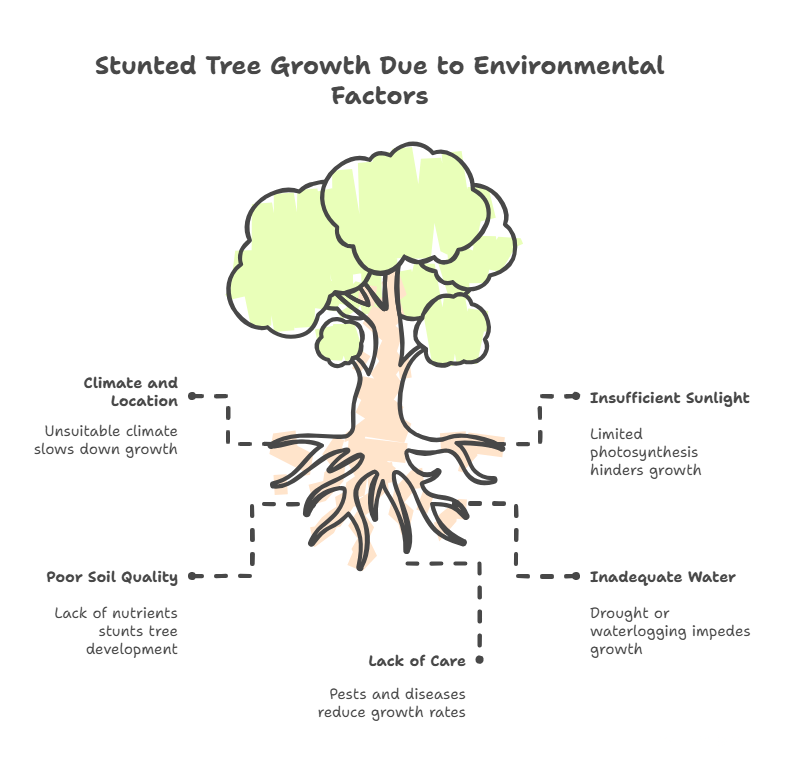
Beyond species, several environmental factors affect growth time. Here are the big ones:
- Climate and Location: Trees grow fastest in climates similar to their native range. Warm, temperate areas with long growing seasons boost annual growth, while cold or dry regions slow it. For instance, a tree in a tropical climate can grow faster than the same species in a cool region.
- Sunlight: Most trees need 6–8 hours of direct sun per day. Adequate light fuels photosynthesis, so shaded trees often grow more slowly.
- Soil Quality: Nutrient-rich, well-drained soil promotes quick growth. Poor or compacted soil stunts trees. Fertile soils let trees put on more height each year.
- Water: Young trees need regular moisture. Consistent watering (but not waterlogging) helps roots establish and fuels steady growth. Drought stress or overly soggy roots will slow a tree way down.
- Care and Stress: Proper care (mulching, pruning, pest control) keeps a tree healthy. On the flip side, pests, diseases, or heavy competition from weeds can sharply reduce growth rates.
In essence, even a fast-growing species will lag in poor conditions, and a slow grower will do relatively better if its needs are met.
In summary, there’s no single timeline for all trees. A quick estimate is: many landscaping trees take 10–30 years to mature, fast-growers reach maturity in about 10 years, and the slowest take decades or even a century. With good site conditions and care, you can often speed up growth (up to their genetic limit). Patience is key – trees truly are a long-term investment. Even a “fast” tree only grows so fast, and a slow tree will require many human lifetimes: for example, an eastern hemlock might need ~250 years to mature fully. Understanding this helps set realistic expectations. Whether you plant a quick poplar or a stately oak, caring for it (and watching it year by year) will reward you with shade and beauty in the long run.