

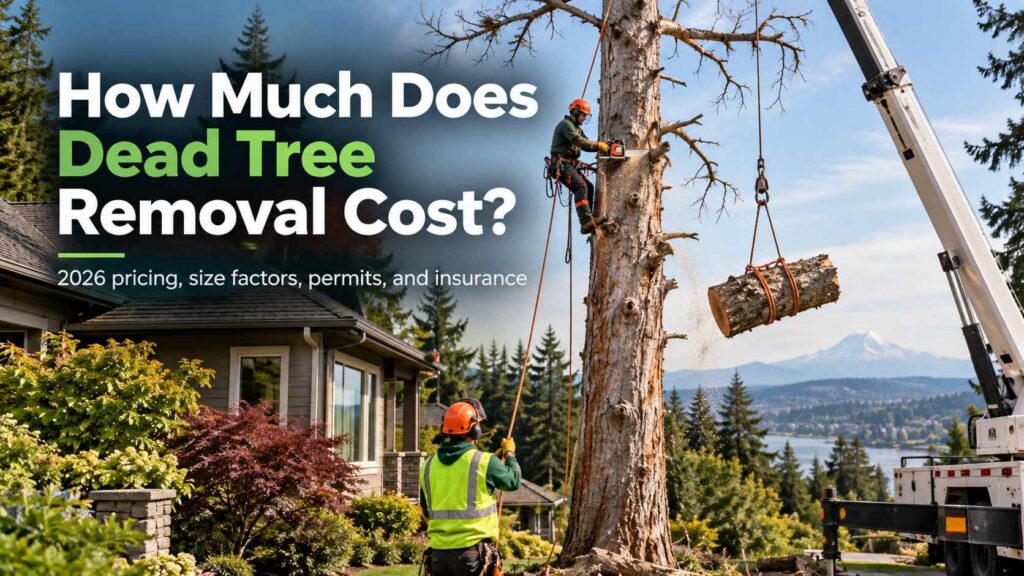
Dead tree removal costs most homeowners between $385 and $1,070, with $750 being the typical price for a standard residential job. That range moves depending on the size of the tree, how long it’s been dead, where it’s standing relative to your house or power lines, and what equipment the crew needs to bring in. A small dead tree under 30 feet might run $150 to $500, while a large one over 60 feet can push well past $2,000.
Here in Portland, you’re also looking at permit requirements that affect the total cost. But before we get into permits, let’s break down what actually drives the price.
Dead Tree Removal Cost by Size
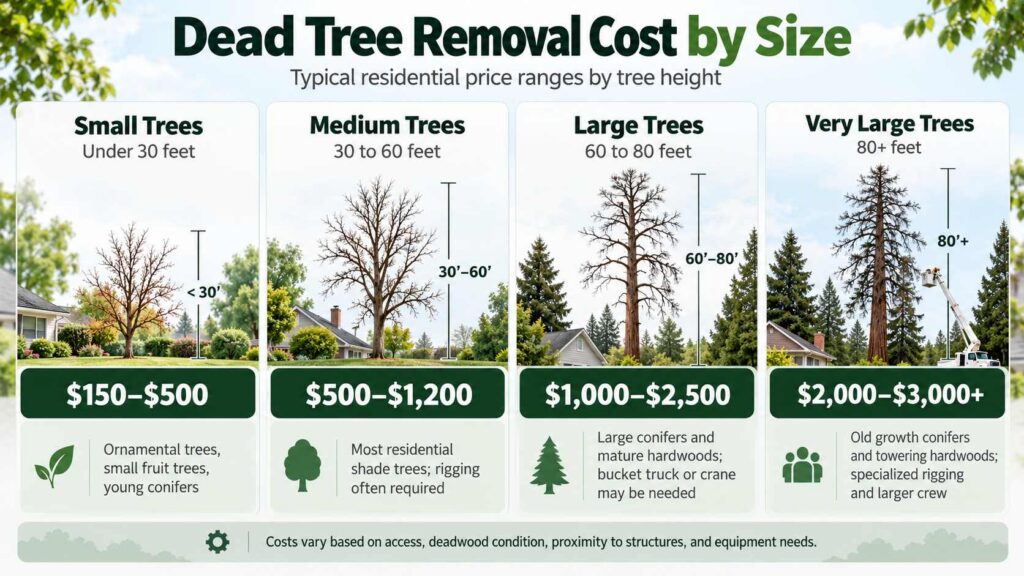
Size is the single biggest factor in what you’ll pay. Here’s how pricing typically breaks down:
Small trees (under 30 feet): $150 to $500. Think ornamental trees, small fruit trees, or young conifers. These are usually straightforward jobs that a crew can handle in a couple of hours without heavy equipment.
Medium trees (30 to 60 feet): $500 to $1,200. This covers most residential shade trees and mid-sized maples, birches, and firs. Rigging and roping are usually involved, especially if the tree is close to a structure.
Large trees (60 to 80 feet): $1,000 to $2,500. Douglas firs, large oaks, and mature conifers fall into this range. A bucket truck or crane is often necessary, and the job can take a full day.
Very large trees (80+ feet): $2,000 to $3,000 or more. Old growth conifers and towering hardwoods at this height require crane work, specialized rigging, and a larger crew. If the tree is near a house or power lines, expect the upper end of that range.
Why Dead Trees Can Cost More Than Living Trees
This surprises a lot of homeowners. You’d think a dead tree would be cheaper to remove since it’s already dead, but that isn’t always the case.
Dead wood is brittle and unpredictable. A climber can’t always trust dead branches to hold their weight the way living wood does. In many cases, the arborist can’t climb the tree at all and needs a bucket truck or crane instead, which adds $500 or more to the job.
The longer a tree has been dead, the more expensive it gets. A recently dead tree still has structural integrity. One that’s been standing dead for two or three years may have extensive internal decay, hollow sections, and root system breakdown. Some companies add a 20% to 50% surcharge for long-dead trees because of the added risk.
On the other hand, dead trees can sometimes cost less. If the tree is in an open area with plenty of room for it to fall, the crew won’t need complex rigging or crane access. Dead wood is also lighter, which means less labor hauling debris.
Factors That Affect Your Final Price
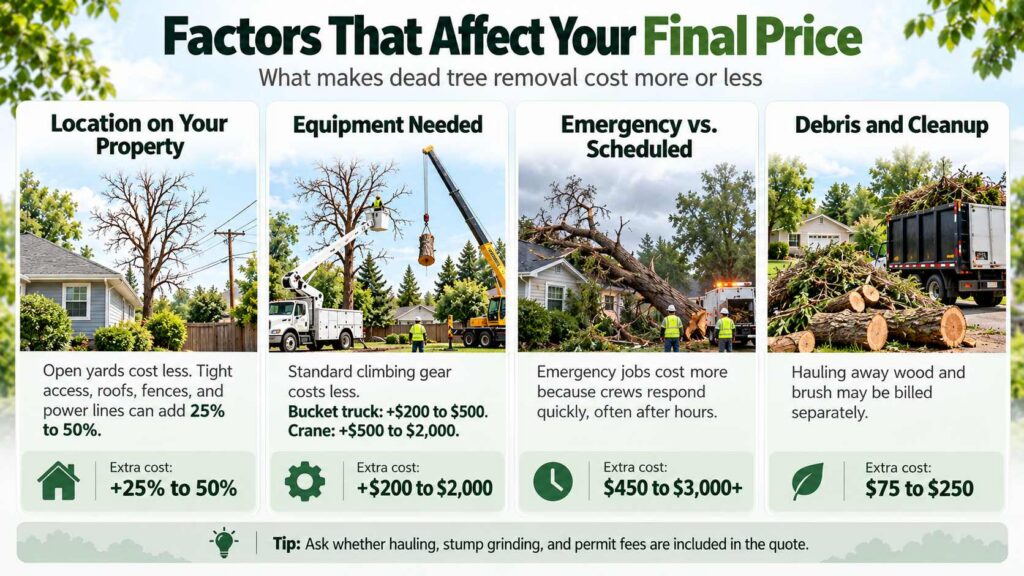
Beyond size, several things push the cost up or down.
Location on your property. A dead tree standing 50 feet from any structure in a flat, open yard is a simple job. The same tree leaning over your roof, tangled in power lines, or wedged between two healthy trees is a very different story. Tight access can add 25% to 50% to the base price.
Equipment needed. A standard tree removal that only requires climbing gear and chainsaws costs less than one that needs a bucket truck ($200 to $500 extra) or a crane ($500 to $2,000 extra).
Emergency vs. scheduled removal. If a dead tree is actively failing or has already dropped major limbs, emergency tree service pricing kicks in. Emergency jobs run $450 to $3,000 or more because crews are dispatched outside normal hours and the job needs to happen fast.
Debris and cleanup. Most quotes include dropping and removing the tree, but hauling away the wood and brush is sometimes a separate charge. Ask upfront whether hauling is included.
Additional Costs to Plan For
The tree itself is the main expense, but a few extras often come with the job.
Stump grinding: $100 to $500 depending on the stump diameter and root spread. Most homeowners opt for stump removal or grinding at the same time since the crew and equipment are already on site.
Permit fees: In Portland, any tree 12 inches DBH (diameter at breast height) or larger requires a permit before removal. Street trees always need a permit regardless of size. Permit fees range from $25 to $500 depending on the project, though the city has been reducing and eliminating many permit fees since July 2025.
Limb and brush disposal: If you want the wood hauled off rather than left on site, expect $75 to $250 depending on volume. Some companies include this in their quote and some don’t.
Portland Tree Removal Permits for Dead Trees
Portland takes its tree canopy seriously. If you’re removing a tree 12 inches DBH or larger, you need a tree removal permit. In environmental overlay zones, the threshold drops to 6 inches.
The good news for dead trees: Portland has a streamlined permit process for documented dead or dying trees. An arborist documents the tree’s condition, and the permit typically processes within three business days rather than the longer timeline for healthy tree removals.
Don’t skip the permit. Unpermitted tree removal in Portland carries fines of $1,000 or more. If you’re not sure whether your tree needs a permit, a certified arborist can assess the situation during a free estimate.
Does Insurance Cover Dead Tree Removal?
It depends on what happened.
If a dead tree falls on your house, your homeowner’s insurance will generally cover the removal as part of the damage claim, though insurers can deny coverage if they determine you knew the tree was dead and neglected to remove it. If a dead tree falls in your yard and doesn’t hit anything, most policies won’t cover removal because there’s no structural damage to claim against.
One important detail Portland homeowners should know: if your dead tree falls on a neighbor’s property, their insurance typically covers the damage to their structures, but you could be held liable if they can show you knew the tree was dead and failed to remove it. That’s one reason getting a dead tree taken care of sooner rather than later is worth the investment.
Also worth checking: if a dead tree is near power lines, contact your utility company before hiring anyone. Portland General Electric and Pacific Power may trim or remove trees that threaten their lines, so it’s worth a call before paying out of pocket.
Signs a Dead Tree Needs Immediate Removal
Not every dead tree is an emergency, but some can’t wait.
Call a tree care professional right away if you notice large dead branches hanging over your roof, walkways, or where your family spends time outdoors. Fungal growth at the base of the trunk, especially mushrooms that look like shelves or fans, indicates root decay and potential structural failure. Visible lean that wasn’t there before means the root system may be giving way. Bark falling off in large sheets with no green cambium underneath confirms the tree is fully dead.
Portland’s wet winters and wind events make dead trees especially dangerous. A dead tree that might stand fine through a dry summer can come down during the first big November storm.
How to Save Money on Dead Tree Removal
A few strategies can bring the cost down without cutting corners on safety.
Get multiple quotes. Pricing varies significantly between companies, and you want to compare what’s included in each quote. Knowing the right questions to ask helps you compare apples to apples.
Schedule during the off season. Late winter and early spring tend to be slower for tree companies, and you may find better availability and pricing. Summer and fall after storm season are typically the busiest.
Bundle services. If you need stump grinding, brush removal, or trimming on other trees, bundling everything into one visit saves on mobilization costs.
Handle the cleanup yourself. If you’re able to cut and stack the wood and clear brush on your own, some companies will reduce the price since they aren’t hauling debris.
Frequently Asked Questions
Is it cheaper to remove a dead tree than a living tree?
Not always. Dead trees are often more dangerous to remove because the wood is brittle and unpredictable. Climbers can’t always safely ascend dead trees, which means equipment like bucket trucks or cranes may be necessary. A dead tree in an open area with room to fall can be cheaper, but one near structures or power lines often costs the same or more than a living tree of the same size.
Can I remove a dead tree myself?
For small trees under 15 feet that aren’t near structures or power lines, DIY removal is possible if you have the right equipment and experience. Anything larger than that should be handled by a professional. Dead wood is unpredictable, large sections can break off without warning, and the fall direction is harder to control than with a living tree.
How long can a dead tree stay standing?
It depends on the species and conditions. A dead Douglas fir in the Pacific Northwest might stand for several years, but a dead birch or maple may start losing major limbs within months. The real question isn’t how long it can stand, but how long before it becomes a safety risk. Root decay progresses whether the tree is visible from above or not.
Do I need a permit to remove a dead tree in Portland?
Yes, if the tree is 12 inches or larger in diameter at breast height (about 4.5 feet above ground). Portland requires a permit for tree removal regardless of whether the tree is alive or dead. The process for dead trees is streamlined, and the city has reduced many permit fees since 2025.
Will my homeowner’s insurance pay for dead tree removal?
Only if the tree causes damage to a covered structure. If a dead tree falls on your house, the removal is typically covered under your claim. If it falls in your yard without hitting anything, you’ll pay out of pocket. Some policies include limited coverage for debris removal even without structural damage, so check your specific policy.
How do I know if my tree is dead or just dormant?
Scratch a small section of bark on a branch with your fingernail. If you see green tissue underneath, the branch is alive. If it’s brown and dry all the way through, that branch is dead. Do this test on several branches across different parts of the tree. A tree that fails the scratch test everywhere, has no leaf buds in spring, and shows bark peeling away in large sections is dead.