

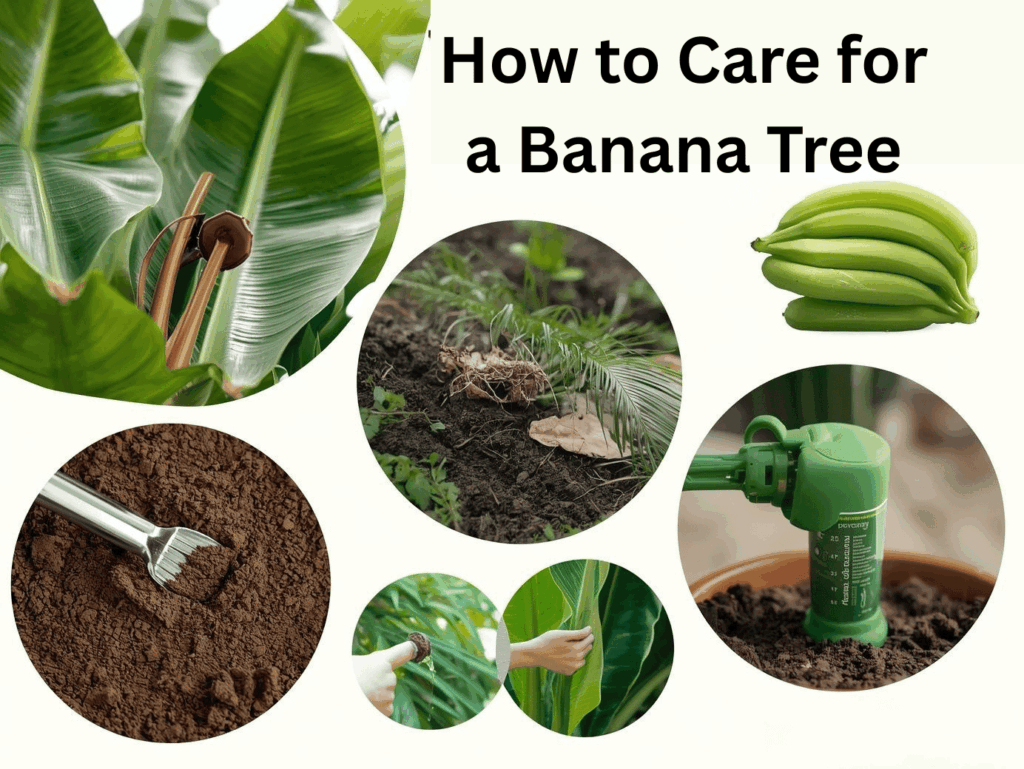
Banana trees are surprisingly easy to care for if you give them warm, sunny, and consistently moist conditions. In short, plant your banana tree in full sun (at least 6–8 hours a day) in rich, well-draining soil, and keep it warm and humid. Water it deeply and regularly so the soil stays evenly moist (about 1–2 inches of water per week). Use a rich, organic soil (loamy soil with compost or manure mixed in) and fertilize often – bananas are heavy feeders and will grow faster if you feed them monthly during the growing season. Remove any dead or yellow leaves and keep only one or two strong “pup” (sucker) shoots at the plant’s base to focus energy on the main trunk. Finally, protect the banana from cold and wind: frost will kill the leaves, so bring potted bananas indoors or insulate outdoor plants in winter.
This quick summary covers the basics. Below we’ll dive into each care aspect – sunlight, water, soil, feeding, pruning, and winter protection – to help your banana tree thrive.
Sunlight & Climate Requirements
Bananas are tropical plants, so they crave heat and light. Choose a spot with full sun (at least 6–8 hours of direct light daily). In very hot climates, some afternoon shade can prevent leaf scorch, but generally more sun means better growth. Aim for daytime temperatures of about 75–95°F (24–35°C) – this is where bananas grow fastest. Growth will slow below about 60°F, and any frost or freezing weather can kill the leaves and even the whole plant.
Because bananas have large flimsy leaves, wind can be a problem. Plant in a location sheltered from strong winds or use windbreaks. Winds over 25 mph can tear the leaves, and very strong gusts (60+ mph) can blow the whole plant over. For example, agricultural guides note that wind protection (or planting near a building) will keep banana leaves intact and stems upright. In cooler climates, a south-facing wall is ideal for extra warmth and shelter.
Key tip: Bananas thrive in warmth and sun. Keep them above 65°F and out of the wind, and they’ll reward you with lush green growth.
Soil & Watering
Plant your banana tree in rich, loose soil with excellent drainage. A loamy mix enriched with compost or aged manure works best. Bananas prefer slightly acidic to neutral soil (around pH 5.5–7.0). Deep soil is ideal: banana roots will spread and search for water, but they don’t tolerate waterlogging. If your soil is heavy clay, consider planting in a raised bed or amending with sand and organic matter to improve drainage.
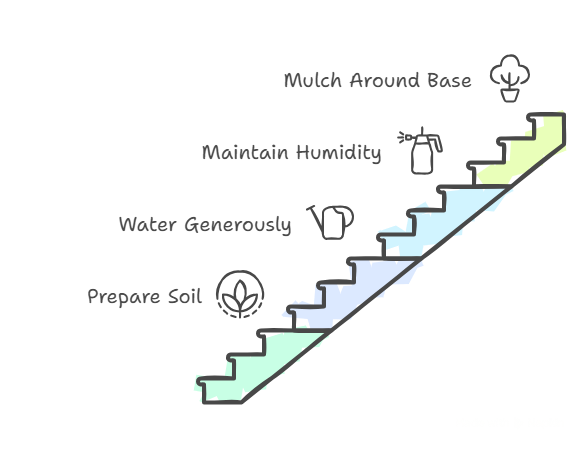
Water generously – bananas are thirsty plants. In the tropics they often get 1–2 inches of rain per week, and you should match that with deep watering. Keep the soil evenly moist, especially during hot, dry weather, but never let it stay soggy (standing water can cause root rot). Water deeply 1–3 times per week, letting the water soak down so the roots are wet through. In containers, you may need to water more often (even daily in heat) because pots dry out faster.
Bananas also appreciate high humidity. If you live in a dry climate or are growing bananas indoors, mist the leaves or place a tray of water nearby to keep humidity up. (If leaves start splitting a lot, it’s often a sign of low humidity.)
Finally, mulch around the base. A 2–4 inch layer of organic mulch – shredded leaves, straw, compost, or even chopped banana trunks – helps keep moisture in the ground and suppresses weeds. Mulching also slowly adds nutrients as it breaks down. Agricultural guides specifically recommend using old banana leaves or trunks as mulch between plants to retain moisture and feed the soil.
Quick checklist for soil and water:
- Plant in deep, loamy, well-draining soil (add compost or manure).
- Keep the ground consistently moist: about 1–2 inches of water per week (rain or irrigation).
- Avoid waterlogging. Mulch heavily to retain moisture and prevent weeds.
Fertilizing & Feeding
Because banana trees grow so fast, they need regular feeding. Experts describe bananas as “heavy feeders” – their big leaves and fruit demand lots of nutrients. Use a balanced, high-nitrogen fertilizer every 2–4 weeks during the growing season. For example, an all-purpose fertilizer like 8-10-8 or similar will work well. Apply it around the plant (following label directions) and gently water it in, keeping it a few inches from the stem so you don’t burn the trunk.
In spring, incorporate plenty of organic matter. Mix in a generous layer of compost or manure into the top 6–8 inches of soil. Many banana growers spread compost or high-nitrogen fertilizer around each plant at the start of the growing season to boost spring growth. A quick rule: each month during spring and summer give a fertilizer feeding, plus yearly apply new compost. This will keep your banana lush and encourage fruiting.
Mulching (as above) also helps feed the tree slowly. As the mulch decomposes, it releases nutrients. Old banana leaves or grass clippings are great – they form a nutrient-rich blanket around the plant. Avoid excess mulch that stays soggy or piles against the stem (that can invite rot).
Remember: A well-fed banana is a strong banana. Feed monthly with a balanced fertilizer and enrich the soil with compost each spring. Healthy, fed plants also resist pests and disease better.
Pruning & Managing “Pups” (Suckers)
Banana trees grow in clumps, sending up new shoots (called suckers or pups) around the main stem. It’s important to manage these pups so the plant’s energy goes into one trunk. Generally, keep only one or two of the healthiest suckers and remove the rest right at ground level. The largest, healthiest pup will grow into the next main trunk after the current stem flowers. All smaller or extra pups should be cut away or dug out – they can rot the soil if left crowded. Extension guides emphasize cutting off all but the biggest sucker, which will replace the current stem.
You should also prune away old or damaged foliage. Remove any yellowed, torn, or dead leaves with a clean, sharp cut at the base. This keeps the plant tidy and directs energy to new growth. Florida experts advise trimming off brown dried leaves and any flower or fruit stalk once it’s done. (For example, after harvesting fruit, cut the spent main stem down to a few feet – the new sucker will take over.) Never remove more than about one-third of the green leaves at a time, to avoid shocking the plant.
By following these pruning steps – tidying leaves and limiting shoots – your banana plant puts its energy into growing taller and producing fruit.
Fruiting and Harvesting
If your banana plant is happy, it will flower and produce fruit roughly 10–15 months after planting (timing varies by variety and climate). A big flowering stalk (with bright bracts) appears at the top of the stem, eventually revealing hands of bananas. When the fruit is plump and still green, harvest the whole cluster by cutting it from the stem. Usually this is in late summer. Don’t wait for bananas to ripen fully on the plant, as birds and wildlife may get them. Instead, cut the green bunch and hang it in a cool, shaded spot indoors – bananas will ripen off the plant over a week or two.
After harvesting, cut down the old fruiting stem. Leave about 2–3 feet of the trunk above ground; within a few weeks you can cut the rest away. At this point the remaining suckers will take over and one will become the next main stem. The cycle then repeats: the new stem will grow, flower, and fruit about a year later. (If you don’t want more fruit, you can simply leave the banana as an ornamental; it will continue making suckers and foliage each year.)
Winter Care (in Cooler Climates)
Because bananas are frost-sensitive, they need special care in winter outside tropical zones. If you live where temperatures dip near freezing, choose a hardy variety (like Musa basjoo) or plant in containers that can be moved. The Japanese fiber banana (Musa basjoo) is famously cold-hardy – with heavy mulch it can survive in USDA zone 5 outdoors. Other common bananas need protection.
For potted banana plants, simply bring them indoors or into an unheated garage before frost. They’ll lose some leaves but often revive in spring. For planted bananas, insulate the root and base. Before freezing weather, pile on several feet of dry mulch or straw around the pseudostem base. You can also wrap the trunk with burlap. If a hard freeze hits, the leaves and stem will likely die back, but the underground rhizome can re-sprout in spring. In fact, gardeners often dig up a couple of the small banana pups in fall and pot them for winter – that way at least some of the plant survives indoors.
If your banana plant does freeze to the ground, be patient: it usually sends up new shoots from the roots when it warms up. Some growers even store small rhizome pieces in cool storage and replant in spring.
Winter Survival Tips: In cool areas, mulch heavily or move containers indoors. For extreme cold, consider planting Musa basjoo, which can overwinter with mulch. Otherwise, treat bananas as annuals: let them die back in fall and regrow young pups next spring.
Troubleshooting Common Issues
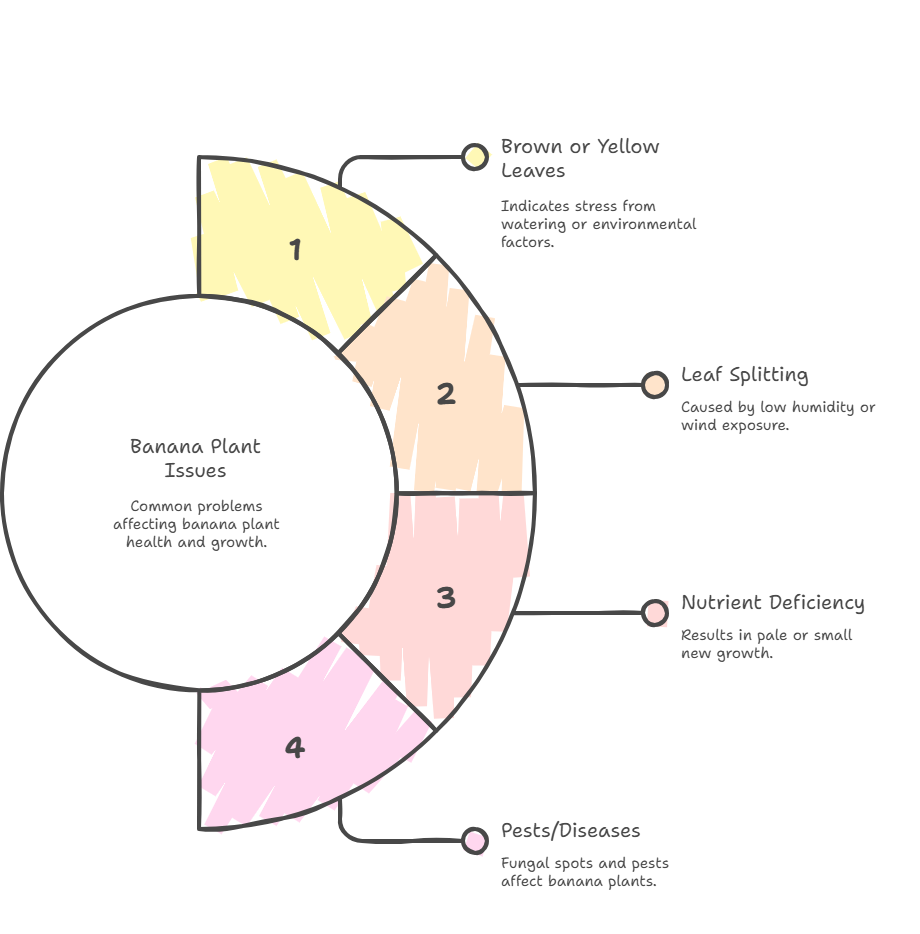
- Brown or yellow leaves: Often a sign of stress. Check watering – yellowing lower leaves usually mean over-watering or poor drainage, while crisp, dry edges often mean under-watering or cold damage. Adjust watering accordingly.
- Leaf splitting: Some tearing is normal, but excessive split leaves can mean low humidity or wind. Group plants together to raise humidity or mist regularly.
- Nutrient deficiency: If new growth is pale or small, it may need more fertilizer. Resume monthly feedings and add compost.
- Pests/Diseases: In humid climates, bananas can get fungal leaf spots (like Sigatoka) or scale insects. Remove heavily diseased leaves and avoid overhead watering. Good airflow (no overcrowding) helps prevent fungal problems. For pests like aphids or mealybugs, wipe leaves with soapy water. (Most home growers rarely have serious disease issues if plants are healthy.)
Following these care guidelines will keep your banana tree thriving. With proper light, warmth, water, and nutrition – plus a little pruning and mulch – your banana will grow vigorously. Before you know it, you’ll have the lush, tropical foliage of a healthy banana tree (and maybe even fruit to enjoy!) in your garden or home.